Quick answer
A café business loan in New Zealand is usually either unsecured working capital sized on your takings — typically $5,000 to $500,000 — or a property-secured loan from $20,000 to $5,000,000 for bigger jobs like a full fit-out or buying a café. Lenders mostly want twelve months of bank statements showing steady card takings, plus a clear reason for the money.
Key points
- Most café funding is for equipment, fit-outs, the winter dip, or buying an existing café.
- Card takings through the bank are your strongest evidence — lenders read them month by month.
- Unsecured options suit trading cafés; property security suits bigger amounts and newer owners.
- Food registration with your council and your lease terms will be checked for purchases and fit-outs.
A café lives on small transactions. Hundreds of flat whites, scones and toasted sandwiches a day add up to a business that can be genuinely profitable — but one where cash arrives a few dollars at a time and leaves in large, lumpy bills. A new grinder, a broken fridge, a winter where the regulars stop coming in at 10am, or a refit that’s overdue by five years can all land at once.
This page explains how café funding usually works in New Zealand, what lenders look at, and how to pick the right kind of finance for the job.
What do café owners usually borrow for?
Most café requests we see fall into a handful of buckets:
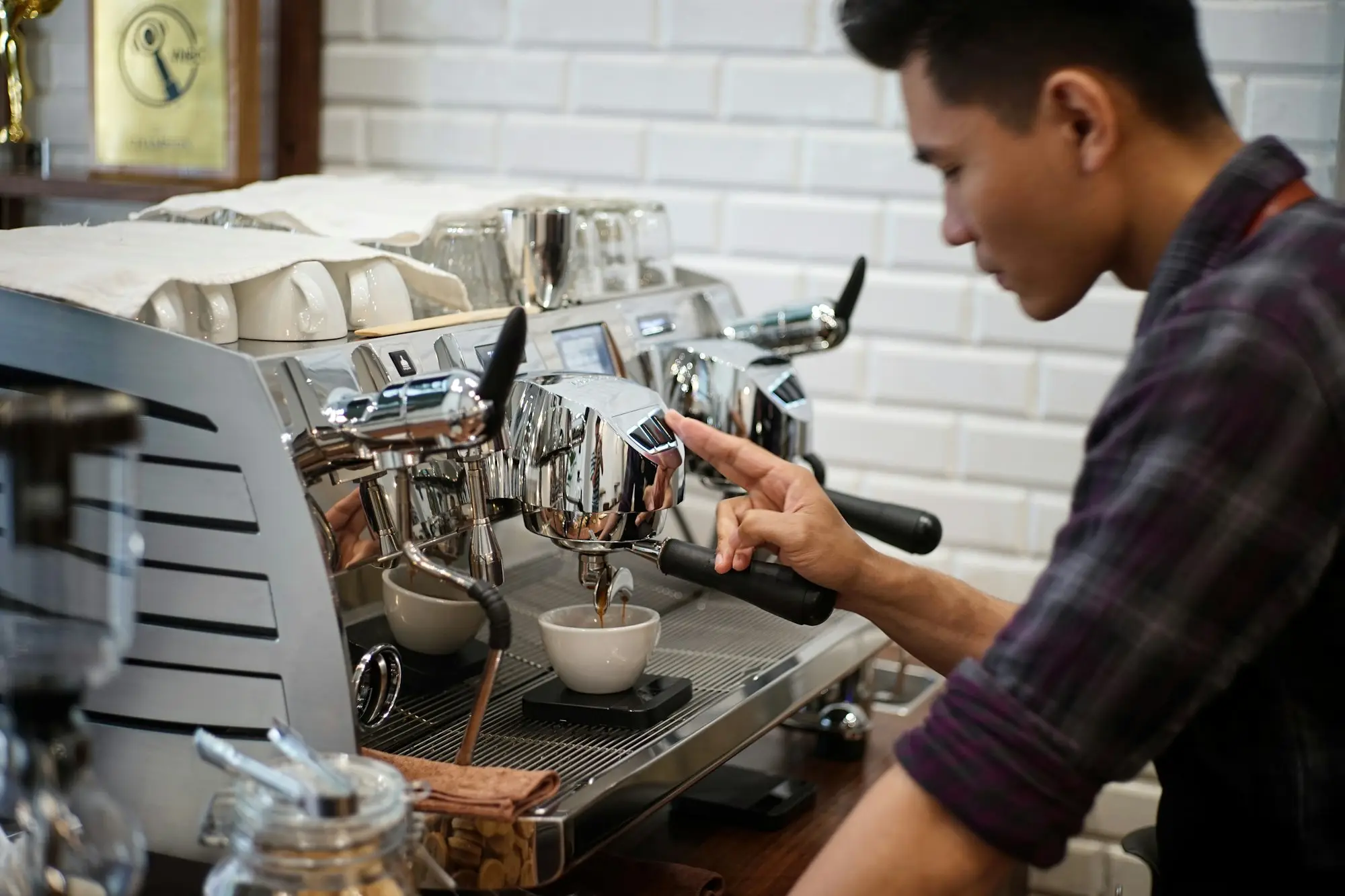
- Equipment. Espresso machines, grinders, cabinet fridges, combi ovens, dishwashers and the plumbing that goes with them. A good machine is a long-lived workhorse, which makes it a natural candidate for spreading the cost.
- Fit-outs and refreshes. New counter, seating, lighting, a bigger kitchen or a better-flowing service area. See our page on shop fit-out finance.
- The winter dip. Many cafés trade well below their average from June to August, but wages, rent and suppliers still need paying.
- Buying a café. Purchase price, stock at valuation and the inevitable post-settlement tidy-up. We cover this in buying a café or shop.
- Tax lumps. GST and provisional tax that fall due in a quiet month.
How do lenders look at a café?
The single most useful document is your business bank statement. Most café takings arrive by card and eftpos, so the deposits tell a lender a lot: how much you take each week, how consistent it is, which months are strong and weak, and whether the business pays its bills on time.
Lenders also look at:
| What they look at | Why it matters for a café |
|---|---|
| Twelve months of bank statements | Shows the full seasonal cycle, not just summer |
| Regular dishonours or overdrawn days | Signals cash stress, even when sales are fine |
| Existing finance repayments | Machine leases and other debts reduce what you can take on |
| Lease length remaining | A fit-out on a lease with 18 months left is harder to fund |
| Who owns the equipment | Leased machines can’t be used as security |
| Trading history | Newer cafés lean more on property security or owner experience |
If you’ve just opened, a lender will want to know your background. An owner who ran a busy café for six years before opening their own is a very different risk from a first-time operator.
Should a café use secured or unsecured funding?
It depends on the size of the job and how you trade.
Unsecured options are typically $5,000 to $500,000 for trading businesses, sized on turnover and bank statements. They’re usually quicker to arrange than property-secured loans and don’t need a valuation. They suit equipment, shorter-term cash flow gaps and smaller refreshes. The trade-off is shorter terms, so repayments are higher relative to the amount borrowed.
Property-secured business loans run from $20,000 to $5,000,000, using a home or commercial property as security through a first or second mortgage, or caveat-style security. They suit bigger fit-outs, buying a café, or owners who’d rather have a longer term and gentler repayments.
If you’re unsure which suits, tell us what you’re planning and a person will talk it through with you. There’s no credit check to ask.
What about equipment and the tax side?
Two things are worth knowing before you spend.
First, Inland Revenue’s Investment Boost lets businesses claim 20% of the cost of new assets bought from 22 May 2025 as an expense in the year they buy them, then depreciate the rest as usual. Inland Revenue notes that second-hand assets sourced from New Zealand don’t qualify. That can change the maths on new versus used equipment — check with your accountant.
Second, if you’re GST-registered you’ll usually claim back the GST on a new machine, but you pay it up front. On a big equipment invoice that’s a real cash cost for a month or two.
An illustrative example
Illustrative only — no real business. A café in a provincial town takes an average of about $55,000 a month, with July around 20% below average and December well above. The espresso machine is on its last legs, the owner wants to replace the cabinet fridge, and the 2-monthly GST payment falls in July.
Rather than empty the bank account in winter, the owner looks at:
- Equipment finance for the machine and fridge, spread over several years.
- A small unsecured working-capital facility to cover July and August, repaid as spring trade returns.
The cash gap estimator is a good way to see your own pattern before you talk to anyone.
What should I have ready?
- Six to twelve months of business bank statements
- Your NZBN or company number, and photo ID
- Quotes for any equipment or fit-out work
- Your lease, or at least the remaining term and renewal rights
- For purchases: the sale and purchase agreement and the vendor’s accounts
If you’re buying, our checklist for buying an existing café walks through what to check before you commit.
Ready to see what your café could qualify for?
If your café needs a machine, a refresh, a winter cushion or the keys to a new site, start a 60-second enquiry. Asking costs nothing on your credit file, your details stay with one team rather than being passed around, and someone who understands how cafés trade will ring you back. Please fill in the form as accurately as you can — your average takings, the amount you need and whether you own property — so the first option we raise is the right one.
Frequently asked questions
Can I get a café loan without owning a house?
Often, yes, if the café has been trading for a while and takings run through the business bank account. Unsecured options are sized on turnover. New cafés, or larger amounts, usually need property security.
How much can a café borrow?
Unsecured funding for trading businesses is typically $5,000 to $500,000, and property-secured business loans run from $20,000 to $5,000,000. What's sensible depends on your weekly takings, margins and what the money is for.
Will a quiet winter count against my café?
Not on its own. Lenders expect hospitality to be seasonal and look at the whole year. A clear explanation of your pattern — and a plan for the quiet months — helps.
Can I fund a new espresso machine or grinder?
Yes. Equipment is one of the most common café costs we see. Some owners use equipment finance for the machine itself and a small working-capital facility for the install and training.
Do lenders care about my food registration?
When you're buying a café or changing premises, yes. Food businesses on a template food control plan register with their local council, and a lender or the vendor's lawyer will expect that to be in order.